
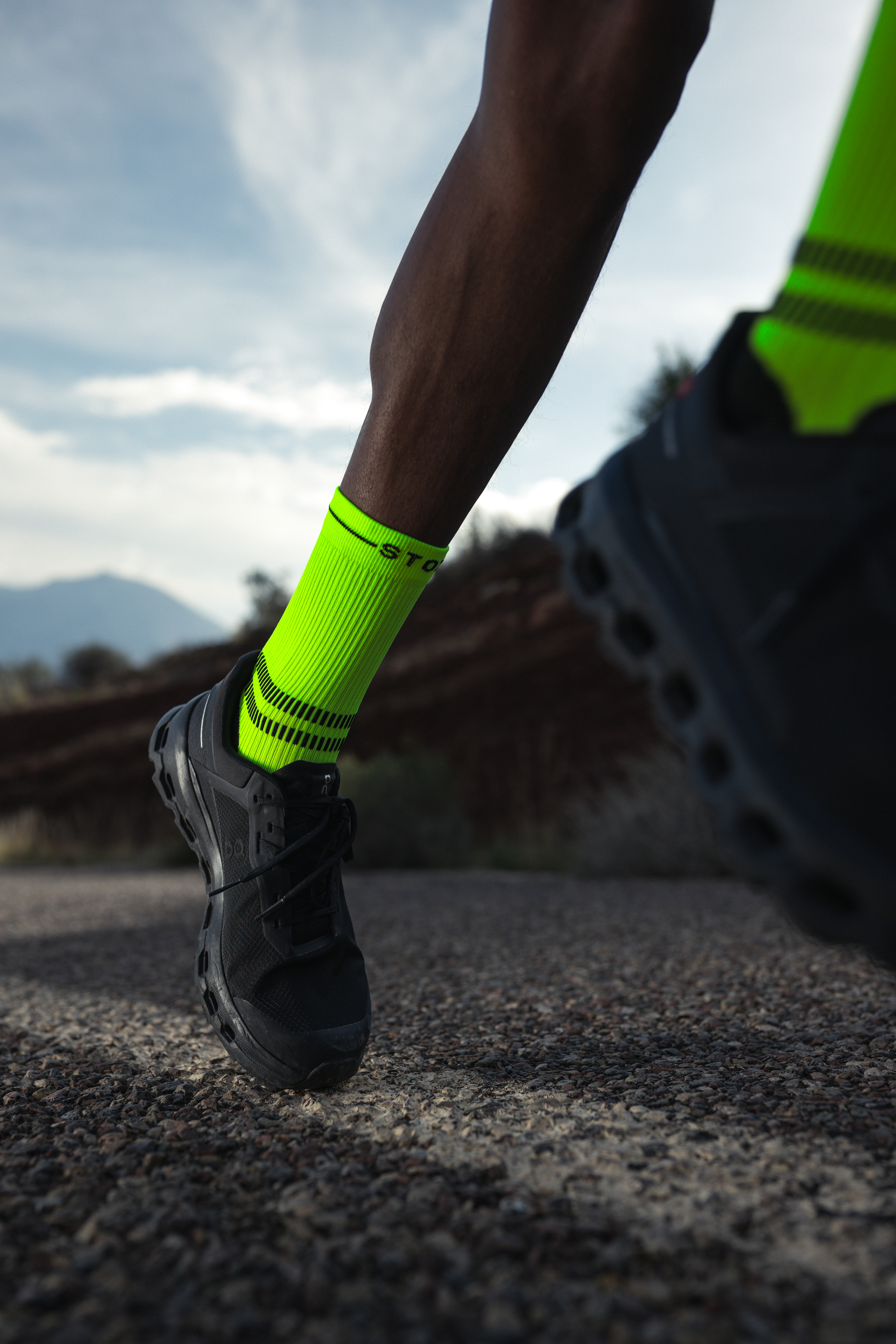
Let me be honest. For years, if not decades, i thought compression socks to look a bit... let’s say medical. Like they'd just come from a long-haul flight. But here's the thing: I realized we might actually be onto something with it. Compression socks have gone from hospital wards to starting lines, and the science behind them is worth a closer look. Also, as simple as that: brands such as STOX Energy Socks have learned to make ‘em look cool and I am a believer now as i experienced what they are able to do for me (e.g. my recovery) and my running.
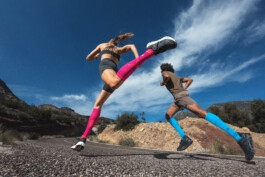
The core idea is pretty straightforward. Compression socks compress the veins in your legs, making them narrower so blood flows faster out of your legs and back to your heart — which speeds up the process of clearing waste products from your muscles. In practice, that translates into a few things that matter a lot to runners.
1. Better Circulation = More Oxygen to Your Muscles
By helping your skeletal muscle pump send blood more quickly back to your heart, your lungs can reoxygenate your blood faster — delivering more oxygen-rich blood back to your leg muscles. Think of it as giving your cardiovascular system a small but meaningful assist
2. Less Muscle Soreness — Seriously
This is where the evidence gets really interesting. A PubMed meta-analysis found large positive effect sizes for post-exercise leg soreness and delayed onset of muscle fatigue when wearing compression clothing. In other words: those heavy, aching legs the day after a long run? Compression socks can genuinely help with that.
Research shows that among runners wearing traditional running socks, as many as 93% experience muscle soreness after running 10 kilometers — a figure that drops to just 14% among runners wearing compression running socks (via STOX). That's a pretty striking difference.
3. Better Recovery Between Sessions
Here's one for the runners who train multiple times a week. A study found that wearing compression socks during high-intensity running had a positive impact on subsequent running performance — even though it didn't affect immediate performance. The decline in run performance between a first and second 5K time trial was significantly greater in runners who didn't wear compression socks. The proposed mechanisms include improved oxygen delivery, reduced muscle oscillation, and superior running mechanics.
And post-marathon? Research published in the Journal of Strength and Conditioning Research found that marathon runners who wore compression socks for 48 hours after a race showed measurable improvement in time to exhaustion on a treadmill test two weeks later.
4. Injury Prevention and Joint Stability
Compression running socks by STOX provide targeted pressure on the muscles and joints, giving them more stability during exercise, and help prevent injuries such as shin splints and Achilles tendon problems. If you've ever battled shin splints, you'll know how much that matter.
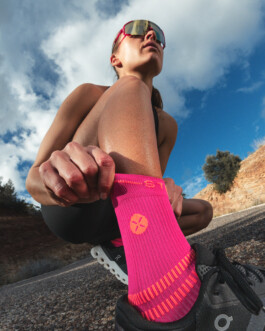
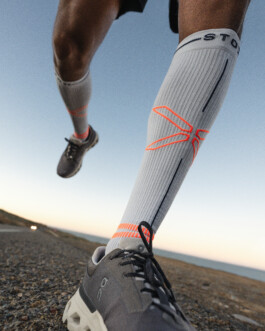
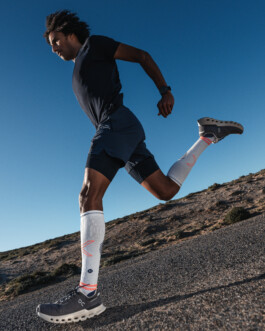
STOX Energy Socks aren't just another sports brand that slapped "compression" on a label. Founded in Amsterdam in 2015, the brand has its roots firmly in medicine, developed on the basis of vascular surgical expertise from the very start. Their compression products are still built on medical know-how and scientifically grounded compression technology to this day. Since 2025, STOX is a certified B Corporation™ - meeting rigorous standards for social and environmental responsibility.

Here's the clever part. STOX uses medically tested graduated compression, and the pressure distribution is precise by design: 100% pressure at the ankle, dropping to 80% at mid-calf, and 65% just below the knee. That gradient isn't random — it's specifically engineered to push blood upward against gravity, back toward the heart. STOX uses the claim “Only Good Pressure” which is not just a claim: running is always linked to pressure but the brand wants to help runners to transform pressure into focused energy. For greater performance, endurance, and recovery; from the first to the last step.
In practice, that means:
Their socks are rated Compression Class 2 (the same class used for medical-grade compression garments) and tested on Swisslastic AG machines, which are the industry standard for certifying compression textiles. Every pair is manufactured in Italy with high-quality materials and precision craftsmanship.

Compression socks won't magically turn you into a faster runner. But if you're dealing with sore legs, slow recovery, or nagging lower leg issues, they're genuinely worth trying. The science is clearest on recovery benefits, and for anyone training consistently, getting back to your next session fresher is a real advantage.
STOX brings something rare to that equation: medically grounded design, independently certified compression standards, and a brand built from vascular surgical expertise. If you haven't given compression socks a proper shot yet, it might be time to stop judging the knee-highs and just try a pair.